Over the course of years working with government institutions, we have seen firsthand how operational data environments work inside large agencies, and where they could potentially improve. Due to strict NDAs, we cannot share specifics about the institutions or their internal systems. What we can share is a pattern we encountered repeatedly, and the prototype we built to solve it.
The Problem: Data Silos at Scale
The Data Is There. The Problem Is What Happens Next.
Large institutions collecting environmental monitoring data such as weather stations, ocean buoys, and surface sensors are sitting on an enormous amount of high-frequency, high-value data. The infrastructure to collect it exists. But turning that data into something actionable is where most organizations stall.
In practice, the breakdown looks like this:
Data ends up fragmented across disconnected systems including legacy file stores, scattered CSVs, and closed Linux environments.
Different teams own different data sources with no unified view.
Cross-referencing readings across stations requires significant manual effort.
Analysts and operators spend hours every week just locating the right data, then additional time validating whether it can be trusted.
The collection problem is solved. The operational problem is not.
What We Built: Meridian IQ
Meridian IQ is our prototype for a real-time, all-in-one environmental monitoring platform built specifically for institutional environments. It centralizes weather and ocean data from multiple source types, ASOS (Automated Synoptic Observing System) weather stations and marine buoys, into a single, unified system that makes the right data immediately accessible.
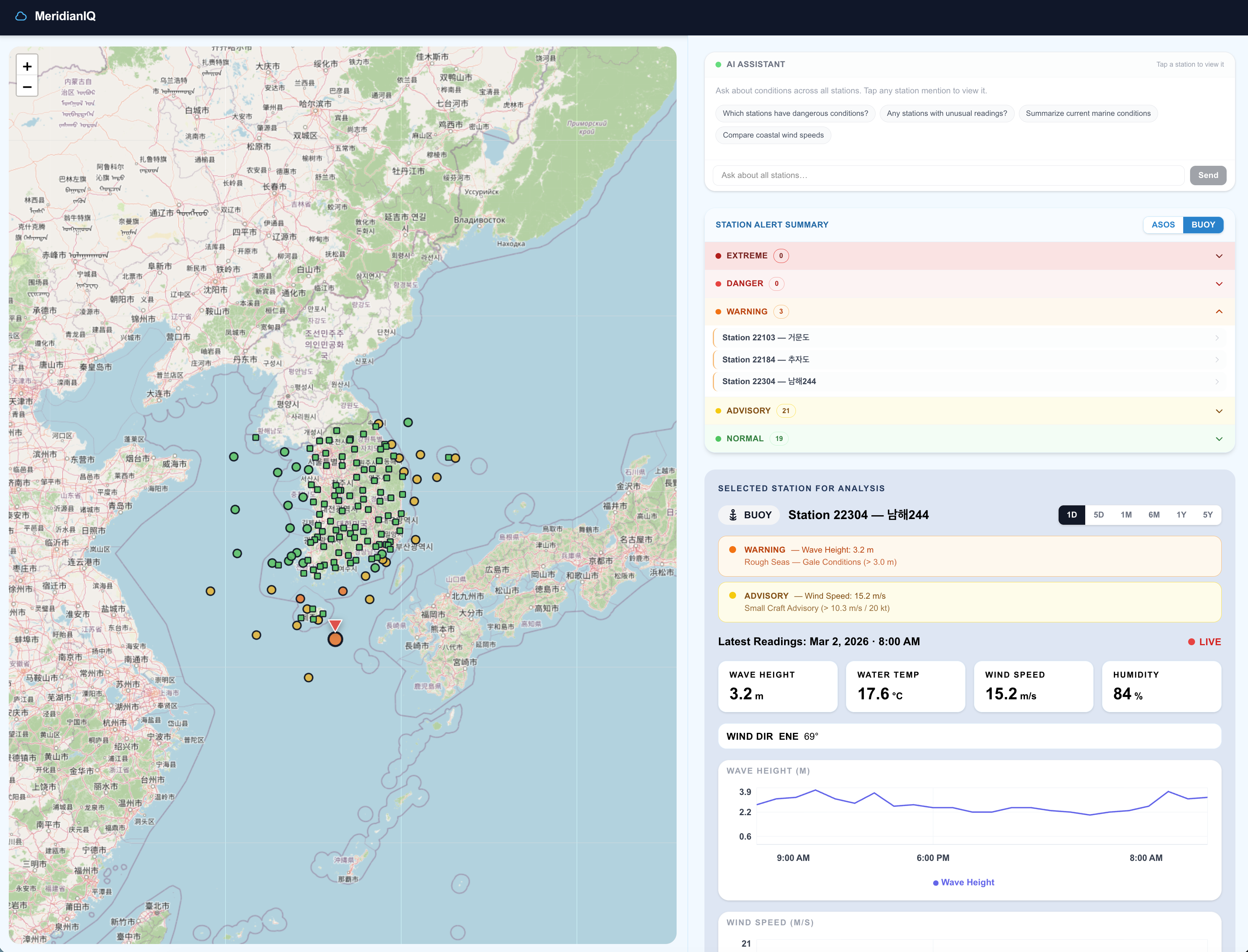
Figure 1: MeridianIQ Main Page
Data Engineering
This data engineering layer turns raw KMA (Korea Meteorological Administration) station and buoy data into reliable, application-ready information. From API ingestion and plain-text parsing to quality validation and PostgreSQL database design, the system ensures that heterogeneous atmospheric and ocean-condition datasets are organized, trustworthy, and ready for analysis, visualization, and decision support.
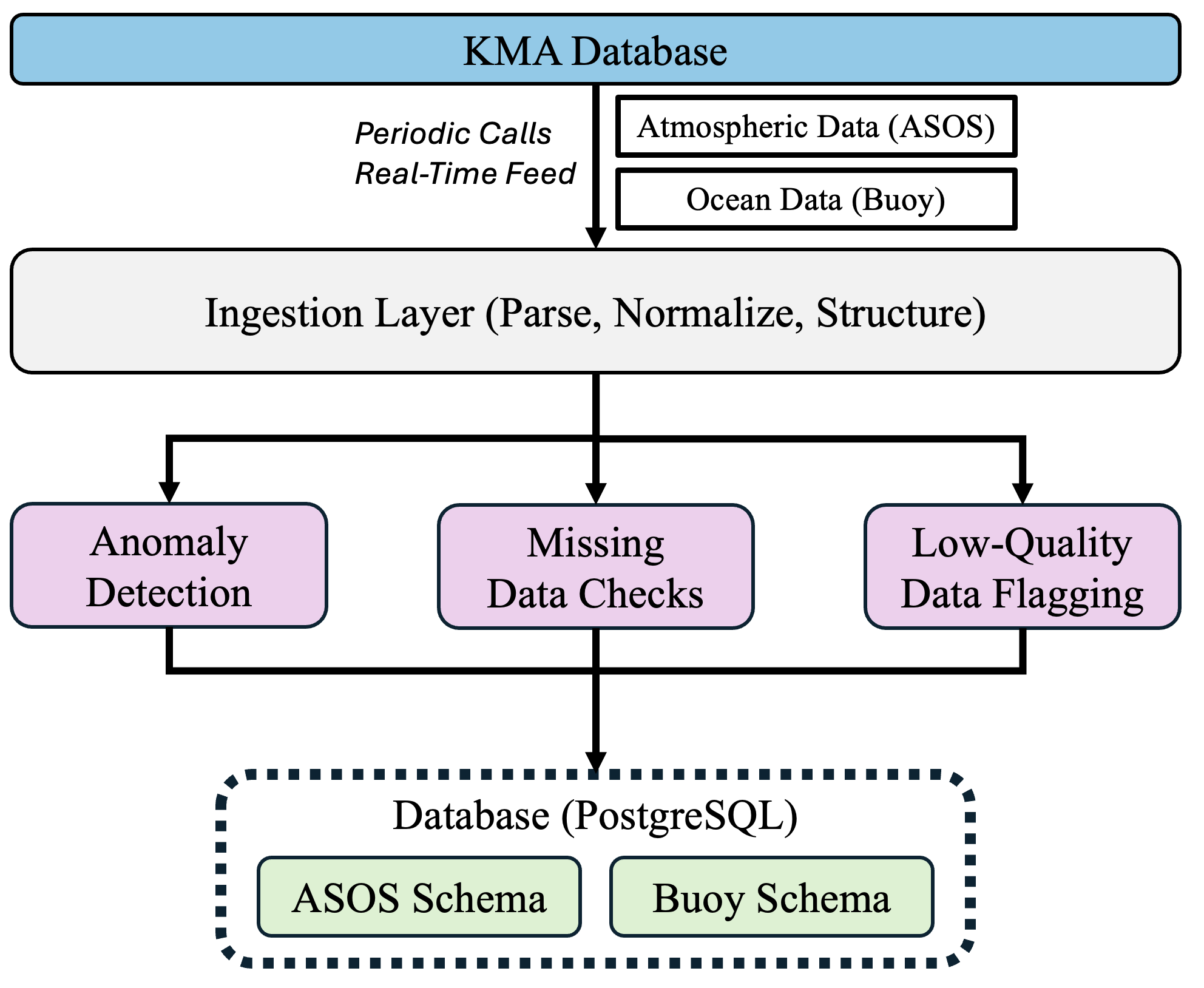
Figure 2: From source to database: ingestion, quality checks, and schema design
Data Collection and Ingestion
Station and buoy data is ingested via the KMA API.
Raw source files arrive in plain-text format.
The ingestion layer handles parsing, normalization, and structuring.
All data feeds into a centralized PostgreSQL database purpose-built for this data model.
Data Quality Checks
Every reading passes through automated quality checks before reaching the application layer.
Anomalies, missing values, and degraded-quality readings are flagged per variable.
Users see clean, trustworthy data at all times.
When issues are detected, the system surfaces them rather than silently passing them through.
Centralized Database Design
Schema is designed to accommodate heterogeneous data formats from fundamentally different sensor types.
ASOS atmospheric readings and buoy ocean condition measurements have different structures, temporal resolutions, and variable sets.
The database architecture handles all of it cleanly in one place.
Full-Stack Application
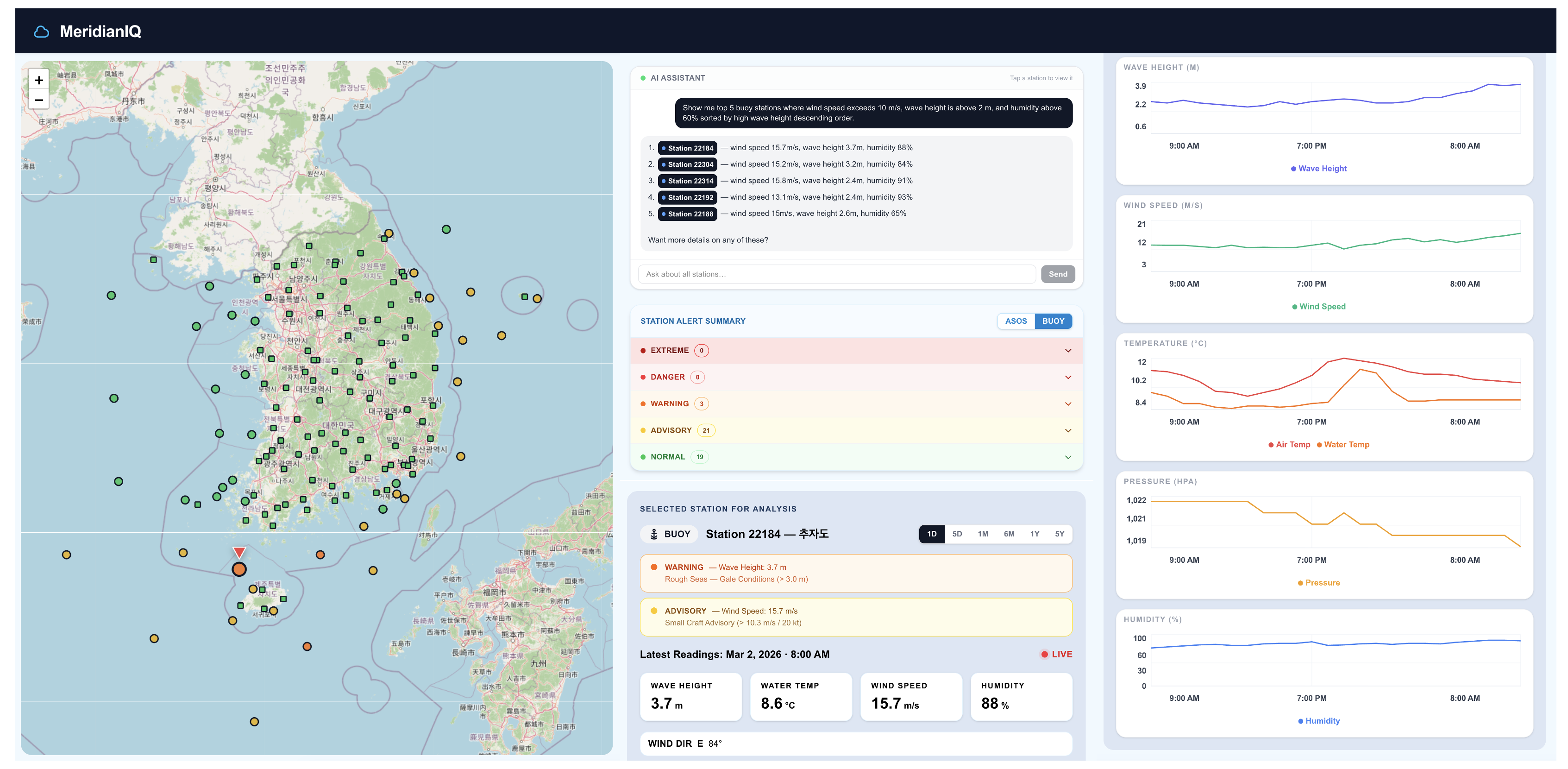
Figure 3: Full platform overview (MeridianIQ)
Real-Time Data Feed: The platform makes periodic API calls to ingest live readings, ensuring that the data users see is the latest information available.
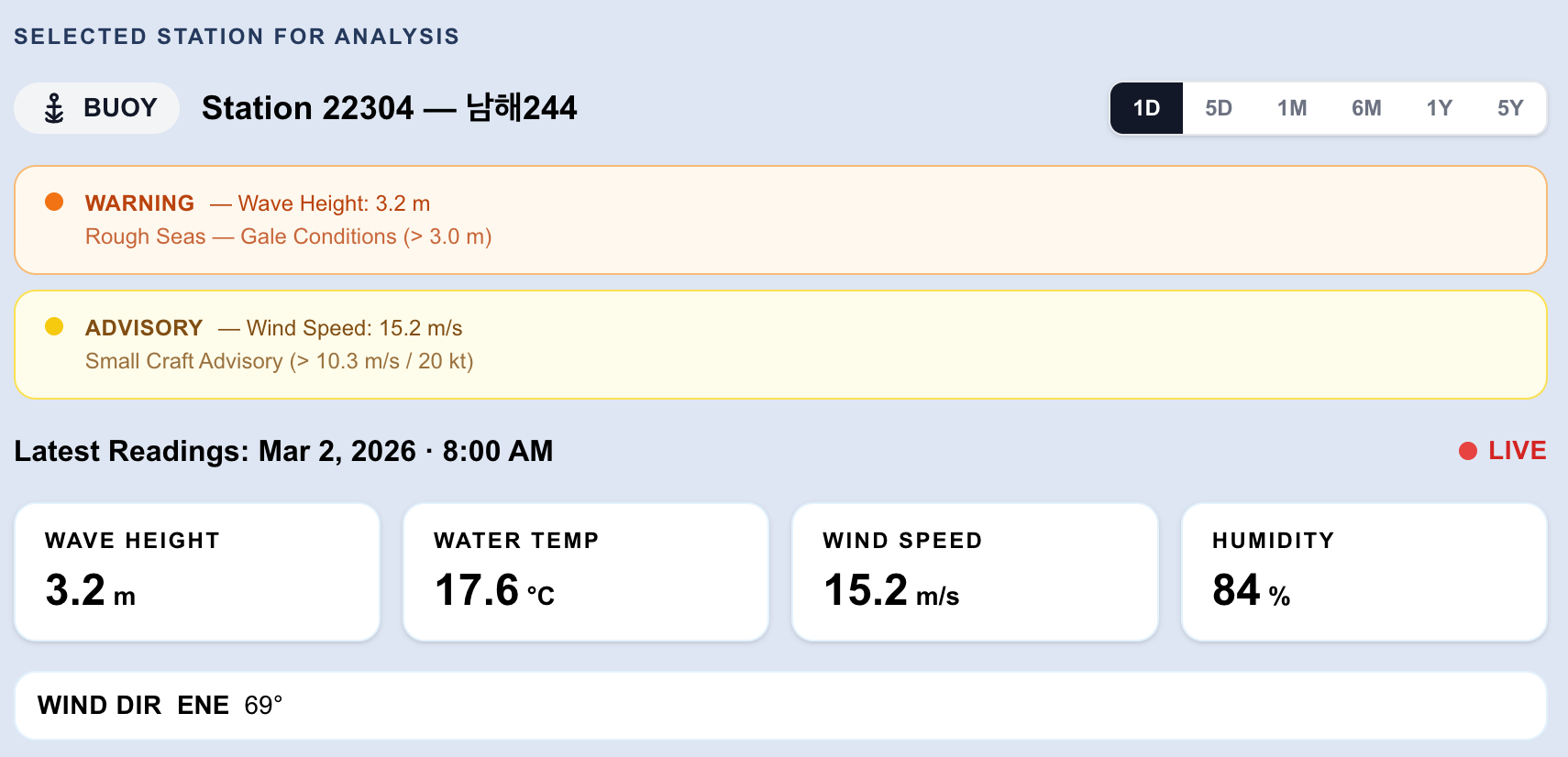
Figure 4: Real-time data feed example (Ocean data measured by Buoy)
Station Map with Alert Level Indicators: An interactive map displays all monitoring stations categorized by type, with alert level overlays based on standard weather and ocean condition thresholds (NOAA Standards). Operators get an at-a-glance view of the entire network and can immediately identify stations that require closer attention.
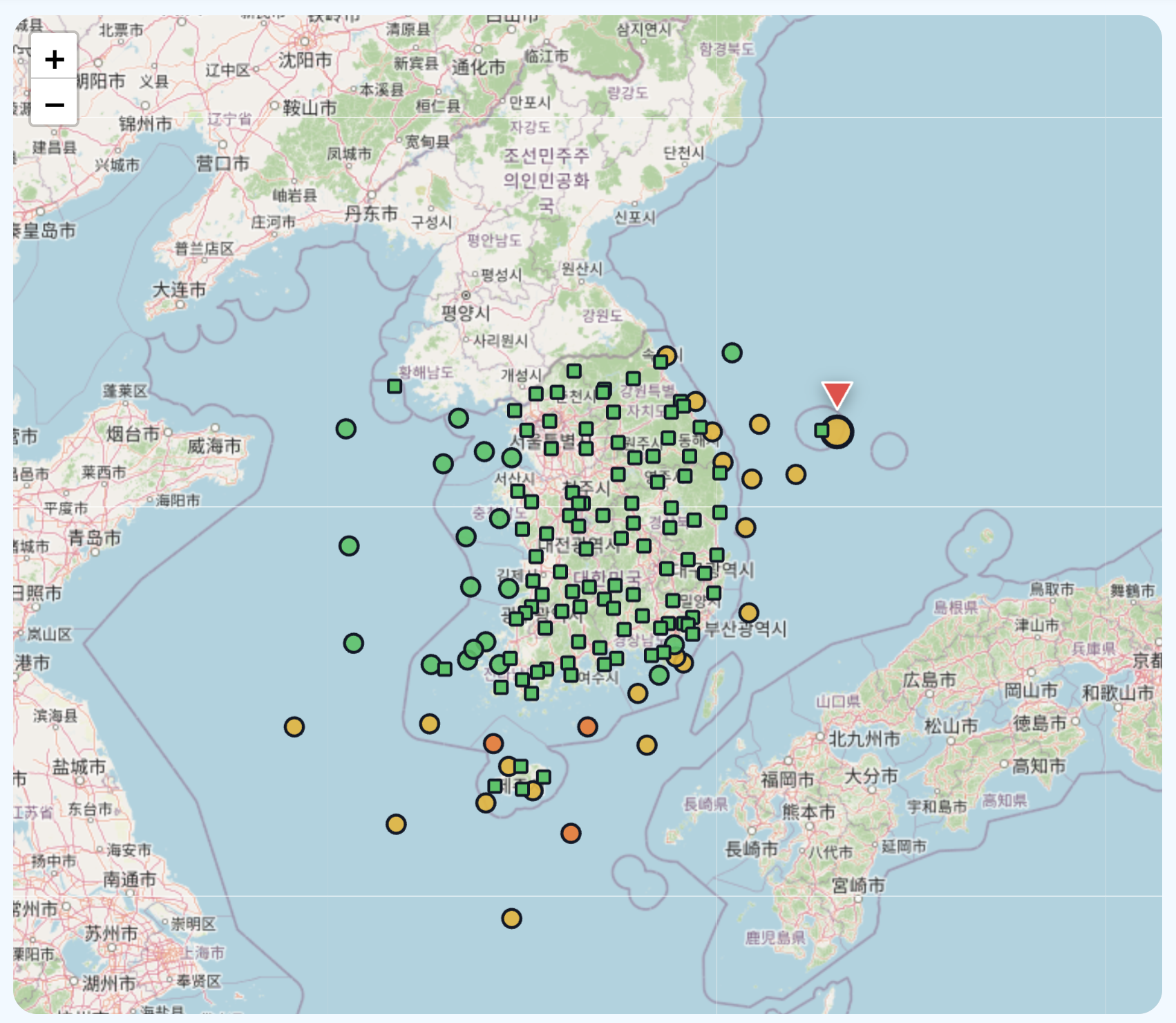
Figure 5: Station map view with alert level indicators (South Korea)
Menu and Overview Panel: A structured station list mirrors the map view, organized by category and alert status. Users can navigate between the spatial and tabular views depending on their workflow.
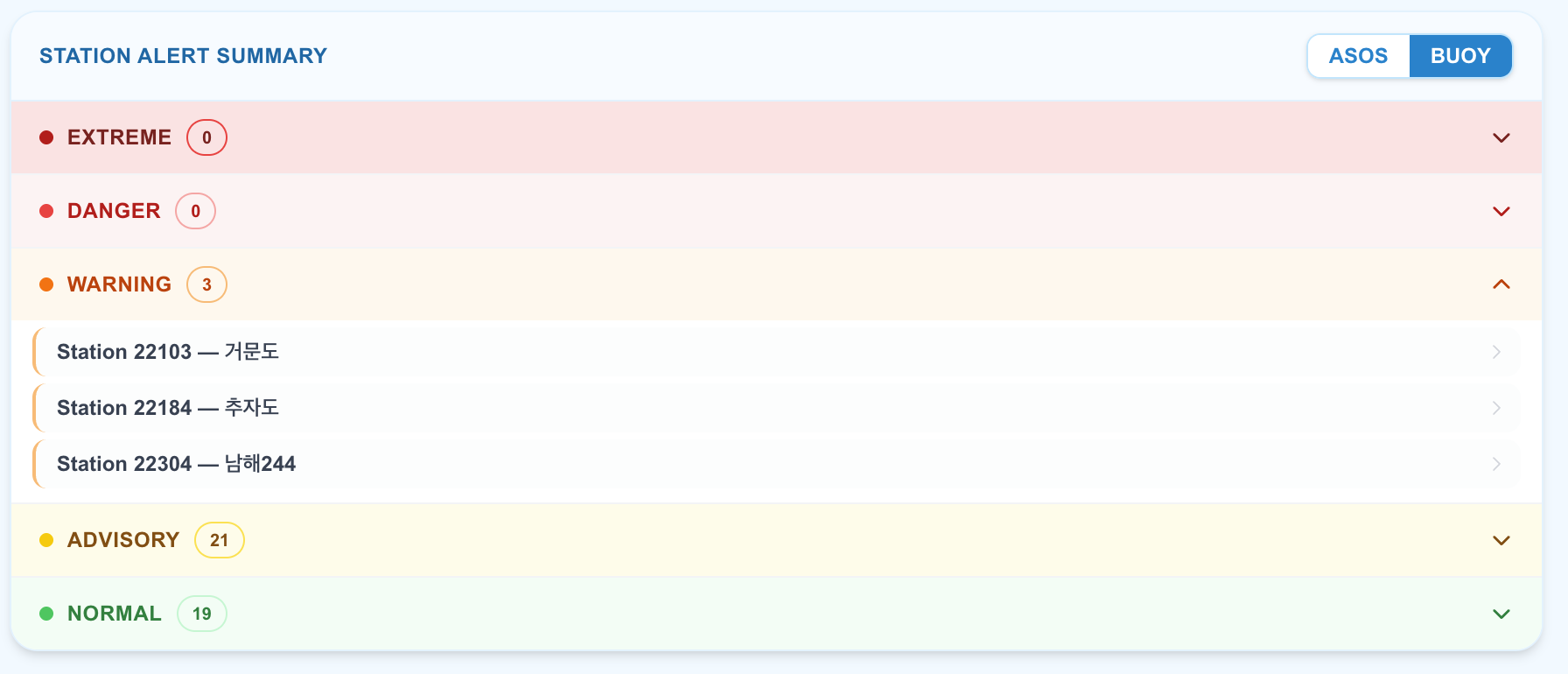
Figure 6: Station overview panel (sorted by alert levels)
Detail Information: Selecting any station opens a detailed view of its readings across time, plotted as interactive time series charts. Users can inspect trends, cross-reference variables, and analyze how conditions have evolved.
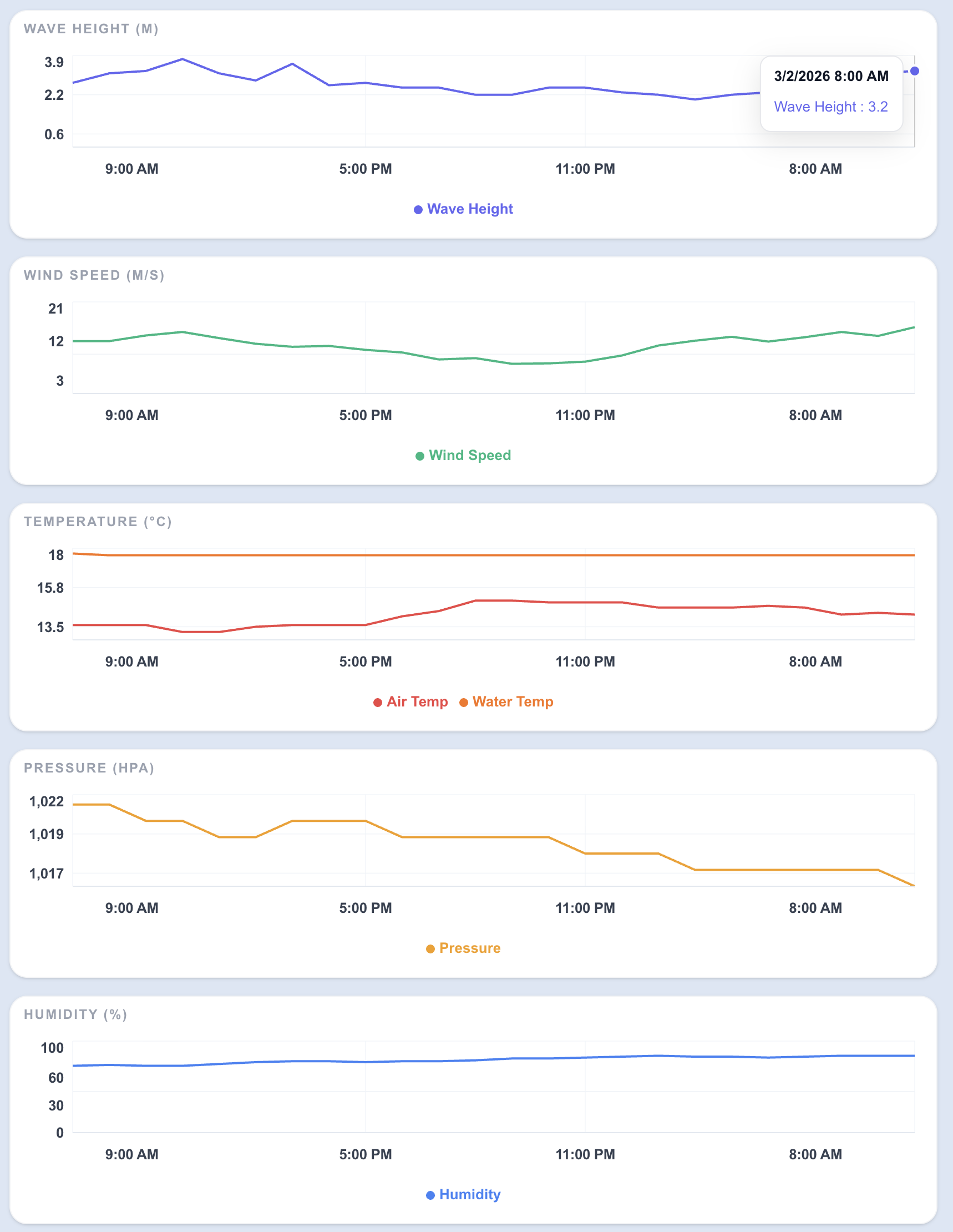
Figure 7: Example of time series data for a target station
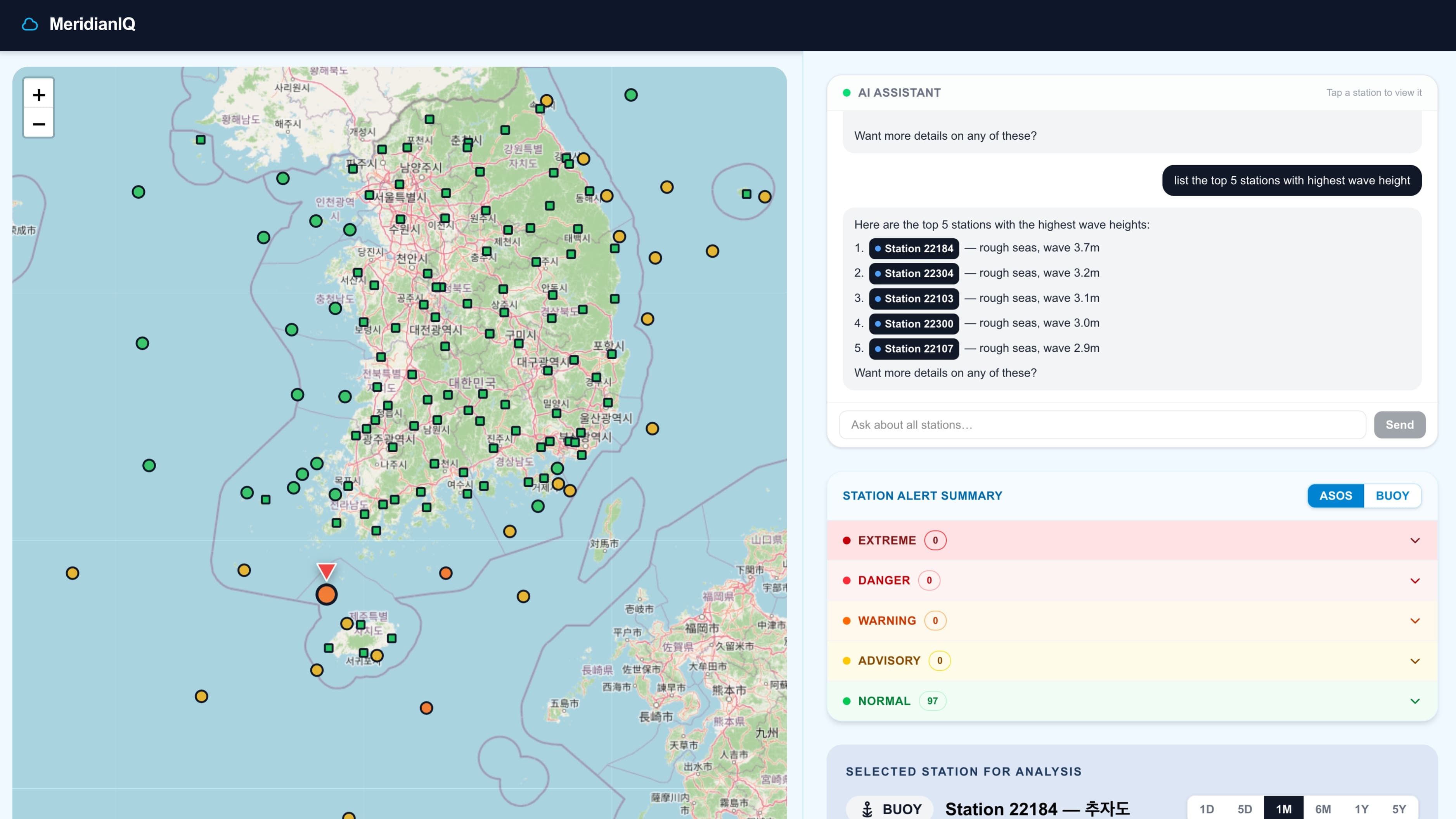
Conversational Data Access via Generative AI: One of the most significant operational time-savers in the platform is a built-in AI assistant that enables users to query complex, multi-variable datasets using plain language. Rather than navigating filter menus or writing database queries, analysts can articulate conditions directly in the way they think about the problem.
Show me the top 5 buoy stations where wind speed exceeds 10 m/s, wave height is above 2 m, and humidity is above 60%.
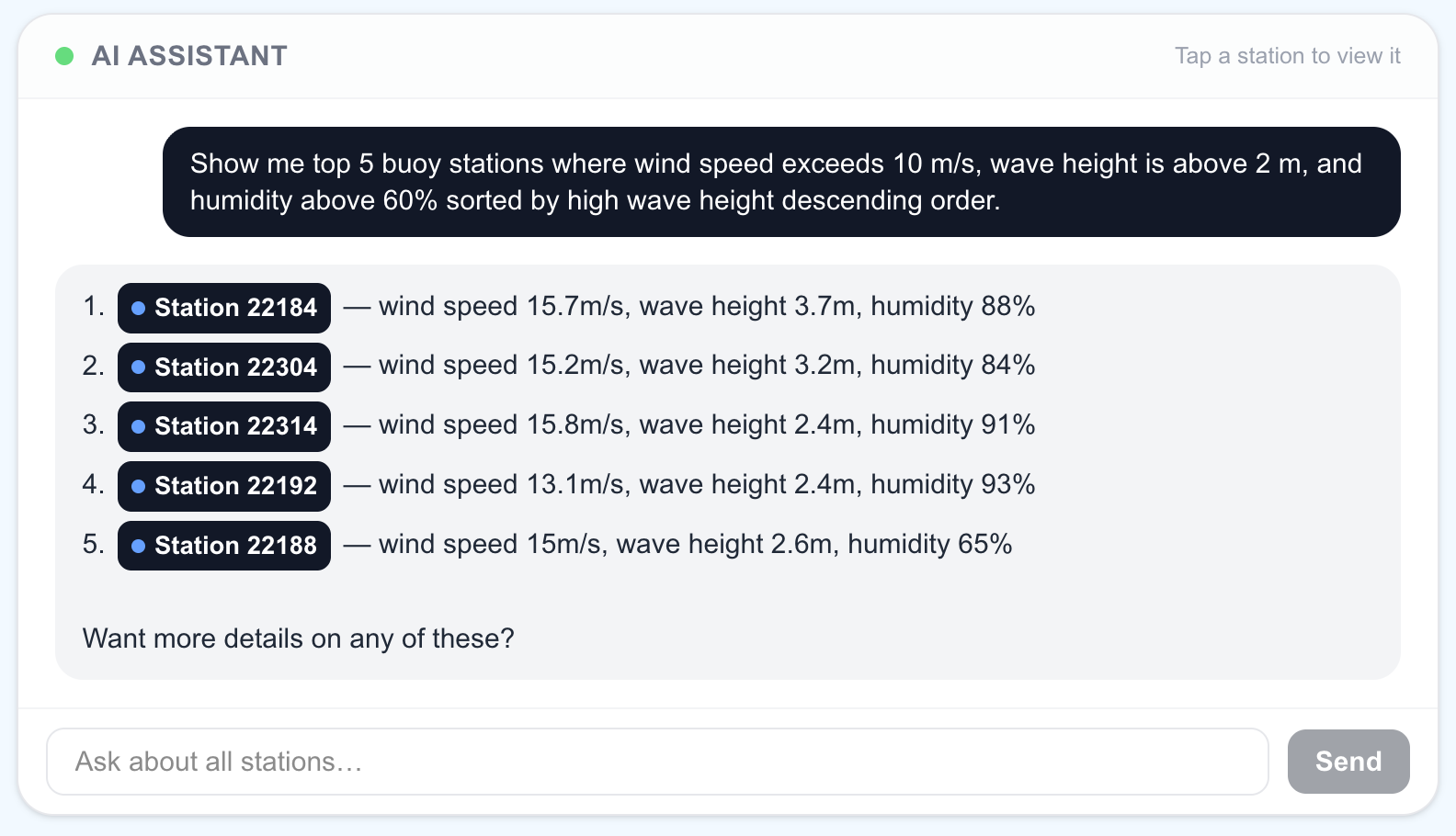
Figure 8: Example of intelligent station filtering via natural language query
The assistant interprets those conditions, queries the database, and surfaces the matching stations instantly. For institutions managing large-scale monitoring networks, the operational impact is direct:
Eliminates the need for manual filter navigation or query writing.
Supports complex, multi-variable conditions in plain language.
Reduces manual search time significantly for analysts working under specific operational thresholds.
Improves day-to-day operational efficiency across the institution.
On-Premise First
Government and public sector institutions frequently require data to remain within their own infrastructure. Meridian IQ is designed with this constraint built in from the start.
The entire system is containerized, enabling it to be tested, validated, and deployed into an on-premise environment with minimal friction:
The entire system is containerized and orchestrated, utilizing tools such as Docker Compose for standard deployments and Kubernetes for larger, mission-critical environments.
Automated scaling and production-grade resilience are built in for high-demand operational contexts.
What runs in development runs in production, on their hardware, inside their network perimeter.
Wrapping Up
Meridian IQ addresses a problem that costs institutions more than most realize. Fragmented systems, manual validation, and difficult data access compound over time — and the real cost is not just operational inefficiency, it is delayed decisions made on data that is hard to find and harder to trust.
A centralized, real-time platform with built-in quality assurance and natural language access to the data changes that equation. Analysts get to the right information faster. Operators see the full network at a glance. And the system runs entirely within the institution's own infrastructure, on their terms.